
If you are a passionate movie lover or film student in Korea, searching for rare festival winners, restored classic cinema, or experimental indie titles on mainstream OTT platforms can be a frustrating experience. Platforms like Netflix KR, TVING, or Coupang Play heavily prioritize high-budget blockbusters, viral reality shows, and trending K-dramas.
When an independent or art-house film is added to a mainstream platform, it is frequently buried deep within a massive catalog where recommendation algorithms rarely show it to viewers. Finding cinema beyond mainstream blockbusters requires turning to specialized, curated film platforms designed specifically for movie enthusiasts.
This guide explains why mainstream algorithms hide non-commercial films, highlights key festival labels to search for in Korea, and helps you choose between monthly subscriptions and pay-per-view rentals.
Why mainstream OTT algorithms hide art-house and independent films
The absence of rare art-house films on general streaming services is not an accident. It is a direct result of how mainstream OTT platforms acquire content and structure their recommendation engines.
Broad appeal licensing vs niche curation
Mainstream platforms license content based on projected subscriber retention. They invest heavily in titles that appeal to millions of casual viewers simultaneously. Because independent, experimental, or historical films target smaller, specialized audiences, recommendation algorithms suppress them in favor of broad-appeal K-dramas to maximize daily active watch time.
Direct archive and festival distribution deals
Specialized film platforms operate under a completely different acquisition model. Rather than chasing mass view counts, curated services partner directly with international film archives, independent distributors, and festival boards. This enables them to secure streaming rights for restored classics, short films, and festival exclusives that commercial OTT platforms never license.
Key festival labels and classic archives to search for in film catalogs
Before committing to a new film service, you can evaluate the quality of its library by searching for recognized industry distribution labels and festival curation tags.
Searching for BIFF, Cannes, and A24 festival selections
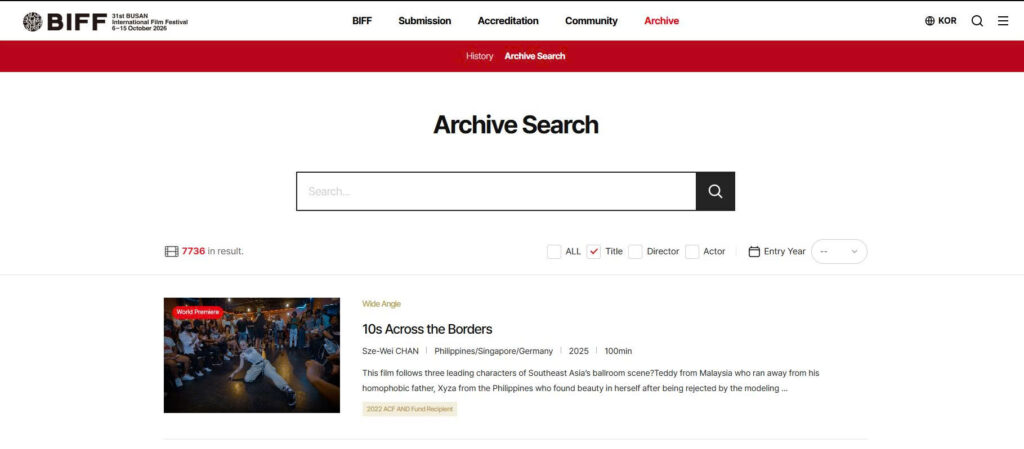
A legitimate curated film platform will organize its catalog using recognized cinema labels. Look for dedicated collection tags featuring the Busan International Film Festival (BIFF – 부산국제영화제), Cannes Film Festival, Berlin International Film Festival, or independent studio labels like A24, Janus Films, and Criterion. Seeing these labels confirms that the platform actively invests in preserving celebrated independent cinema.
Finding classic cinema restorations on KMDb and specialized archives
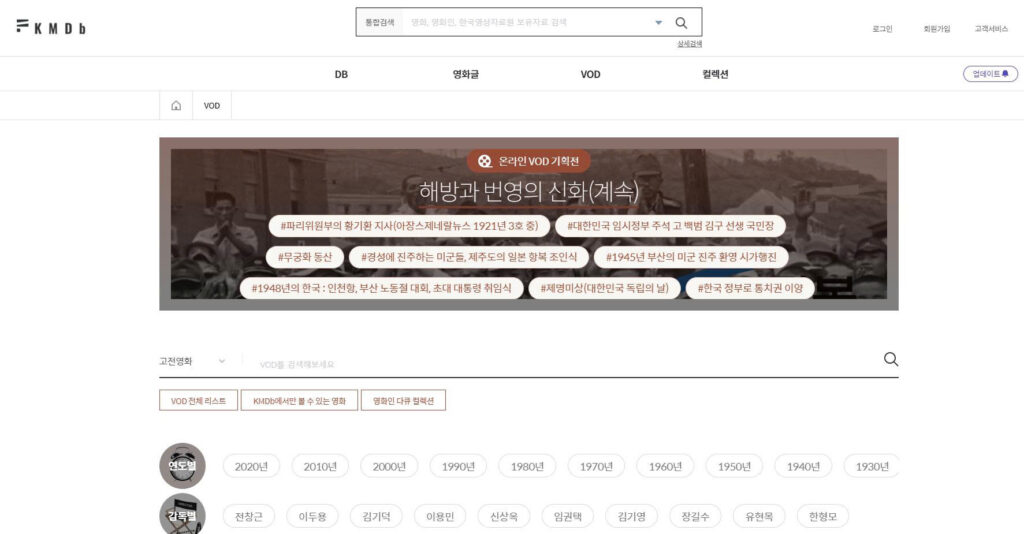
For classic Korean cinema, the Korean Film Archive (KMDb – 한국영상자료원) offers an invaluable, free digital VOD repository featuring 2K and 4K restored classic films. For global arthouse releases, specialized platforms like MUBI Korea curate a rotating monthly selection of hand-picked international films, complete with director retrospectives and festival exclusives.
Comparing monthly subscriptions versus pay-per-view rentals for cinephiles
Specialized film platforms in Korea generally operate under two main business models: monthly subscriptions (SVOD) or transactional pay-per-view rentals (TVOD). Choosing the right model depends on your monthly viewing frequency.
Monthly subscriptions (SVOD: Watcha / MUBI)
Subscription services like Watcha (왓챠) or MUBI charge a flat monthly fee (approx. 7,900 KRW to 12,000 KRW) for unlimited access to their curated streaming library. Watcha is particularly popular among Korean cinephiles (씨네필) because its recommendation engine integrates with user rating databases, making it excellent for discovering indie films and A24 releases.
Pay-per-view rentals (TVOD: Naver Series On)
If you only watch one or two specific festival films per month, paying a monthly subscription may be wasteful. Transactional platforms like Naver Series On (네이버 시리즈온) allow you to rent or purchase individual rare films for a fixed 7-day period (typically 1,500 KRW to 5,000 KRW per title). This model gives you access to newly restored or festival-exclusive titles without committing to an ongoing monthly bill.
4 common myths about independent film streaming
Understanding how digital film distribution works will help you avoid common traps when searching for rare cinema:
- Myth 1: “A film listed on a mainstream OTT will stay there permanently.”
Commercial platforms license indie films on short, temporary contracts. Once the licensing window expires, the film disappears completely. Dedicated archives and specialized services retain films for far longer periods. - Myth 2: “Rare or old films always have poor picture and sound quality.”
Specialized services invest heavily in pristine 2K and 4K digital restorations. A restored classic on a curated platform frequently offers higher video bitrates and better color grading than a poorly compressed stream on a general OTT. - Myth 3: “A platform with a larger total library is always better.”
A general OTT boasting 5,000 titles may contain only a handful of art-house films buried under commercial releases. A specialized platform with 500 carefully selected films is far more useful to a cinephile. - Myth 4: “Any service branding itself as ‘art-house’ guarantees rare films.”
Always inspect the catalog directly before subscribing. Search for specific directors (like Park Chan-wook, Bong Joon-ho, or Edward Yang) and festival tags to verify that the service actually carries genuine independent cinema rather than just older commercial movies.